

Step-by-step guide
How to turn your car into an electric generator with a power inverter
Short answer: you can turn your car into an electric generator by wiring a 12-volt power inverter to the battery through a fuse and mounting it where you can reach the outlets, for example under the seat. It turns 12 V into 110 V in the US (or 220 V if you buy that model). I recommend a pure sine wave inverter for electronics, plus a correctly sized cable and fuse.
The steps below follow my install of a Spartan pure sine inverter under the seat of a Ram ProMaster City van, used for small tools, phones, laptops and tool batteries.
In this article
- Understand the 12-volt-to-110-volt circuit
- Choose peak watts, running watts and a pure sine wave
- Size the cable and add a fuse
- Start with the van and locate the 12-volt battery
- Make a pass-through and pull the kick-panel trim
- Unbolt the seat and unplug the seat connectors
- Mount the inverter under the seat
- Strip the cable, add heat shrink and crimp the terminals
- Land the positive cable at the battery, through a fuse
- Scrape paint and make a solid chassis ground
- Mount the ANL fuse so you can replace it later
- Power on and check the outlets and indicator lights
- Why use a car inverter instead of a portable generator?
- Pure sine wave vs square wave inverters
- How to keep the car battery charged
- Troubleshooting a car power inverter install
- Safety checklist before you switch the inverter on
- Frequently asked questions
- Watch the video
Step 1Understand the 12-volt-to-110-volt circuit
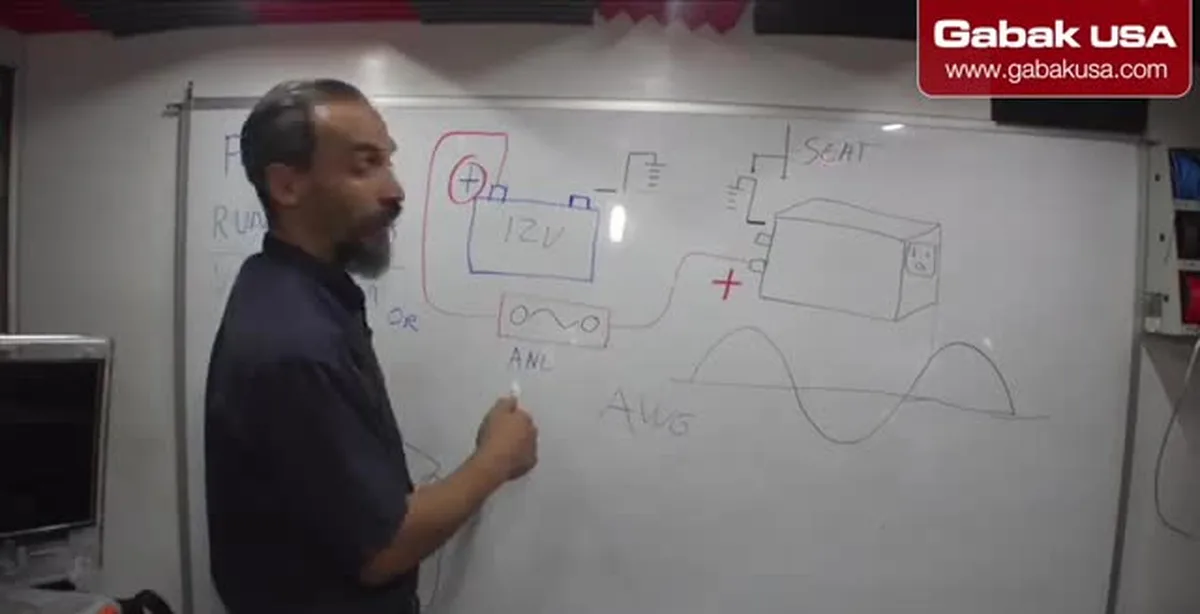
- The car battery is 12 volts. The inverter turns that into 110 V (US) or 220 V if you buy a 220 V unit.
- Battery positive goes through a fuse (ANL on the board) to the inverter under the seat. Negative can go to the chassis.
- Positive to positive, negative to negative — do not swap them.
Caution: The video description's safety rule: never run the vehicle in a closed garage. A running engine produces carbon monoxide. Work and run it outdoors or with real ventilation.
Step 2Choose peak watts, running watts and a pure sine wave
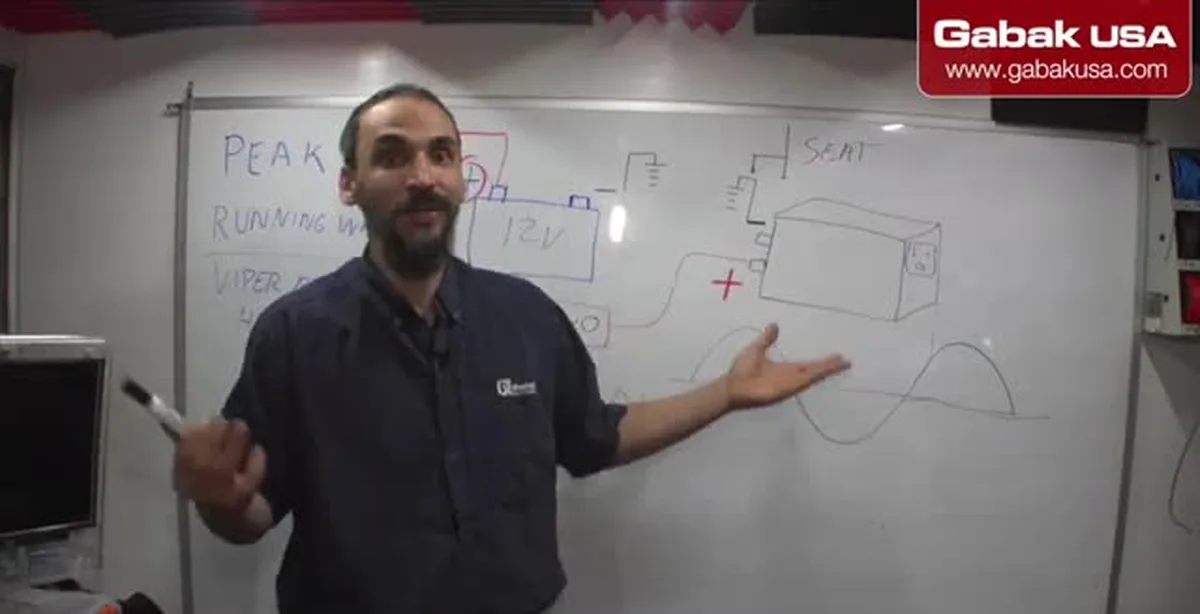
- Inverters have peak (surge) watts and running watts. Running is what it can hold continuously.
- The Spartan in the video is 3,000 W peak / 1,500 W running. For small tools plus charging laptops, phones and batteries, that was plenty, even all at once.
- For a hard load such as a circular saw, I would look at at least 2,500–3,000 W.
- Waveforms: square, semi-square and pure sine. Buy pure sine for electronics — I have seen a phone act weird on a low-quality square-wave unit. Simple tools may not care.
Step 3Size the cable and add a fuse
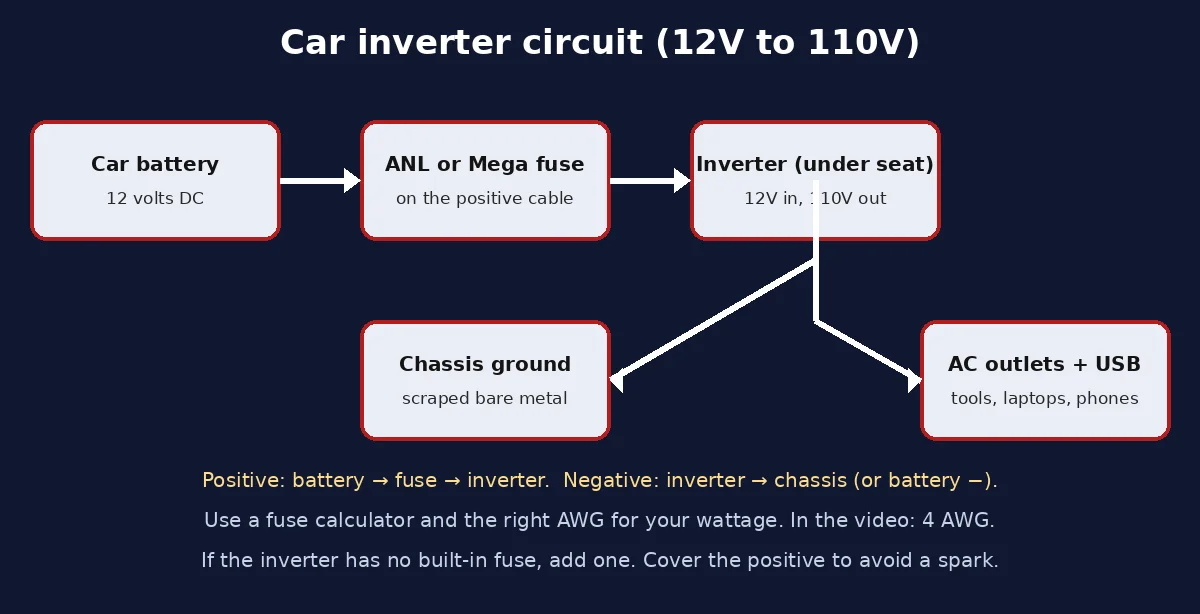
- If the inverter has no built-in fuse, add one on the positive cable.
- Two common styles: Mega and ANL (usually cheaper, and the one most people use).
- Fuse size depends on wattage and cable. Use a fuse calculator — I do not quote an amp rating in the video.
- In the US, cable size is AWG (millimeters in Europe). Thicker cable, lower AWG number. I show 22–24 AWG only as a contrast. Bigger loads may need 2, 0, 2/0 or 3/0 AWG. In the van I crimp 4 AWG.
Caution: Size the cable and fuse for the inverter's current. An undersized cable or a missing fuse can overheat.
Step 4Start with the van and locate the 12-volt battery
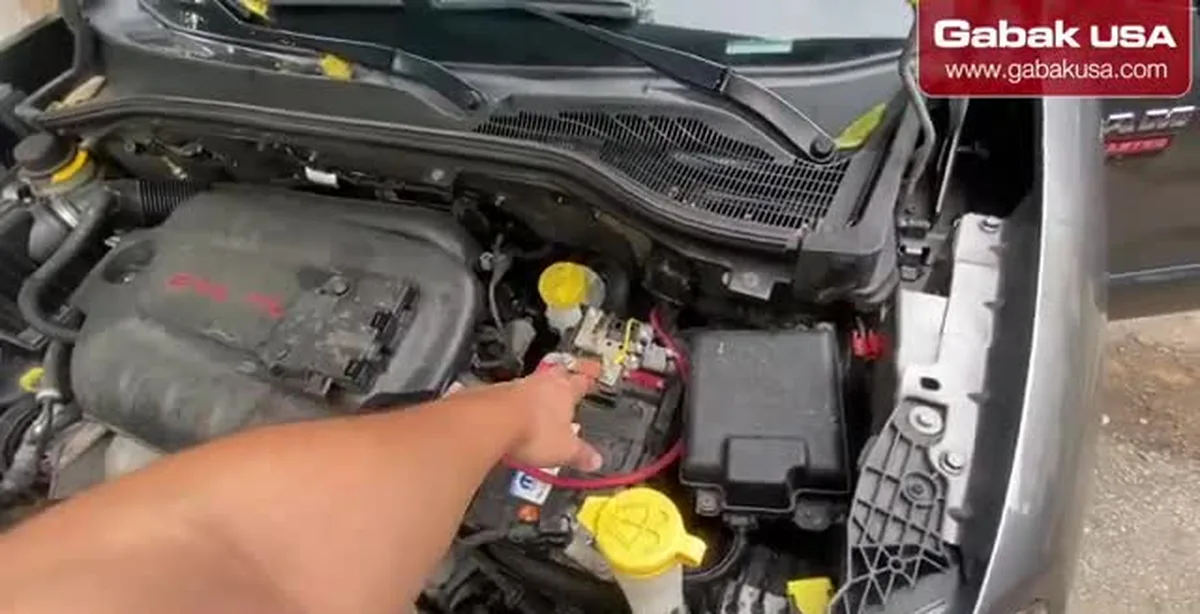
- The practice portion is on a Ram ProMaster City (I call it a ProMaster). The idea is the same on a car or truck, but the battery, seat and pass-through change.
- Open the hood, find the battery, and plan a short, protected route into the cabin — away from sharp edges, the exhaust and moving parts.
Step 5Make a pass-through and pull the kick-panel trim
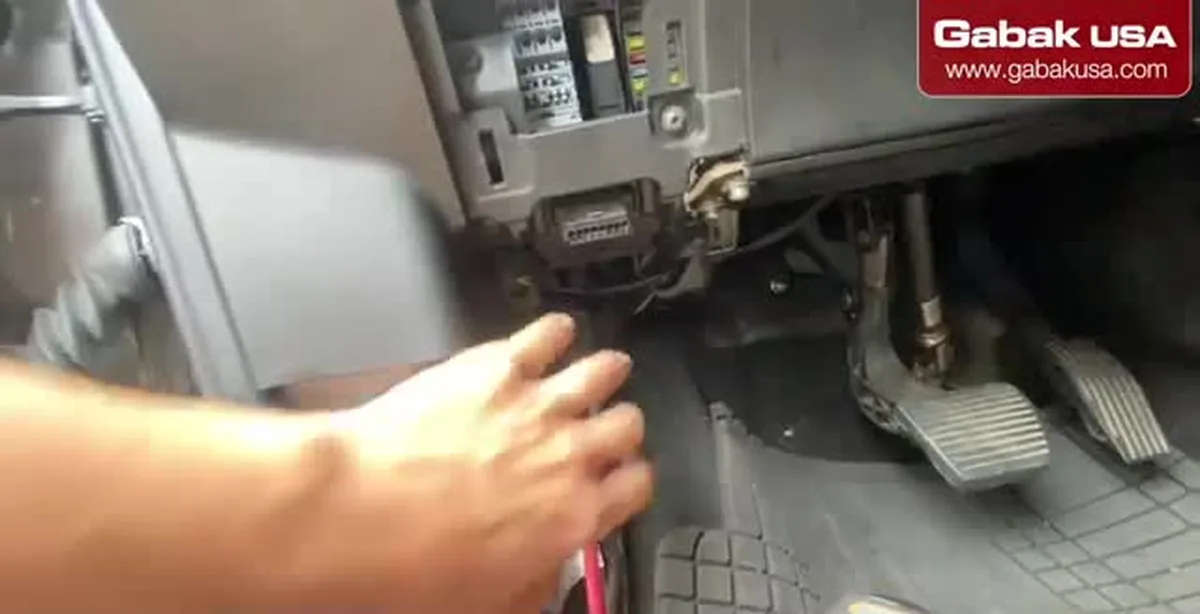
- I cut a hole in a rubber area with a hole saw so the cable can pass into the cabin. Rubber is easier than body metal and kinder to the insulation if the hole is sized (and grommeted) properly.
- The kick-panel trim by the pedals on this van pulls off — it is snapped in, no screws in that piece. Pull it up and it comes loose.
- Common mistake: forcing a cable through raw metal with no grommet, which later cuts the jacket.
Step 6Unbolt the seat and unplug the seat connectors
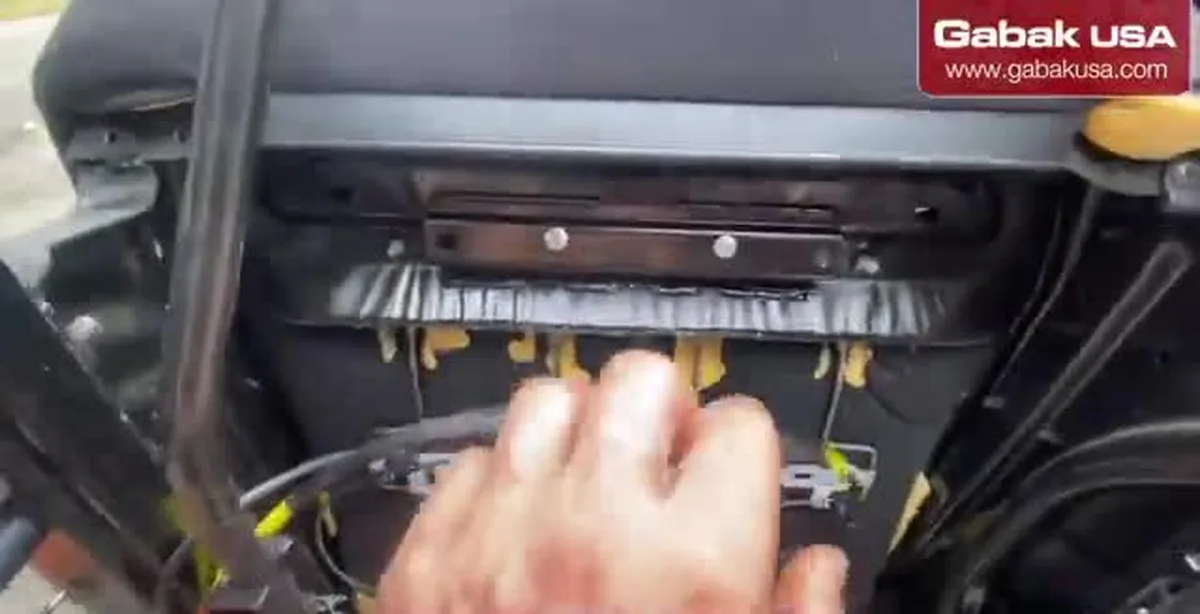
- The seat has four screws: two in front, two in back. One rear screw is horizontal, not vertical.
- Use the right bit (a star / Torx-style bit here). Slide the seat to reach the front and rear bolts.
- Unplug the two seat connectors before you lift the seat (an orange plug is visible later).
Step 7Mount the inverter under the seat
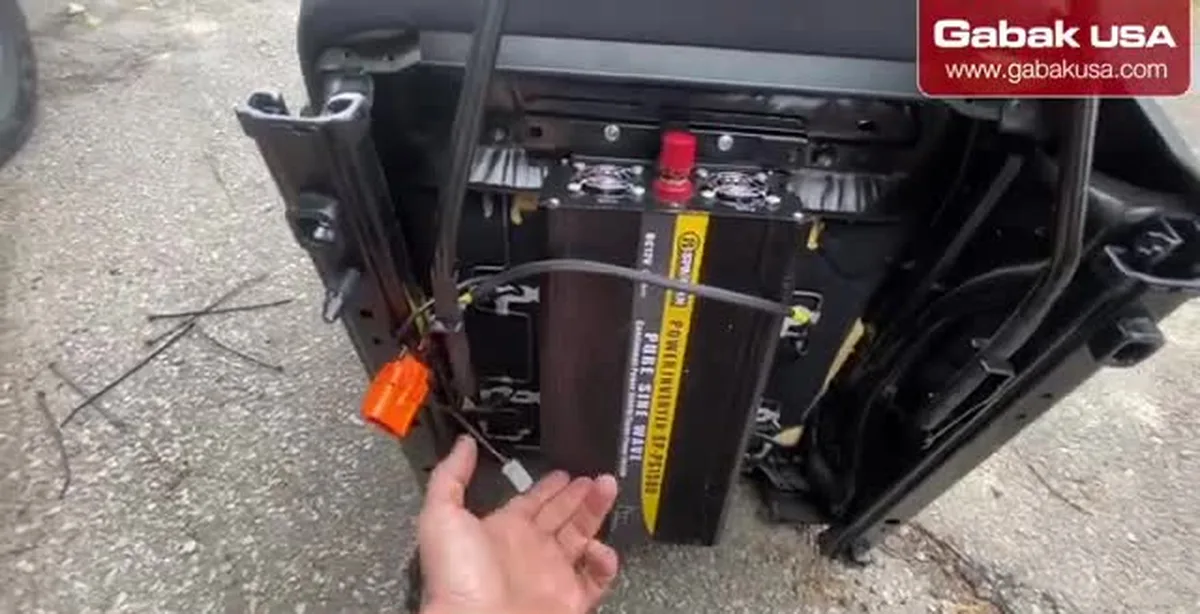
- I bolted the Spartan pure sine inverter under the seat so the DC terminals and AC outlets are reachable but out of the way.
- Start with two screws, then add the rest so it is firm. Zip ties can keep the cable on the frame.
- One side is DC input, the other is AC output. You can use a remote if the inverter has one. Leave room for the cooling fans and check that the seat still slides.
Step 8Strip the cable, add heat shrink and crimp the terminals
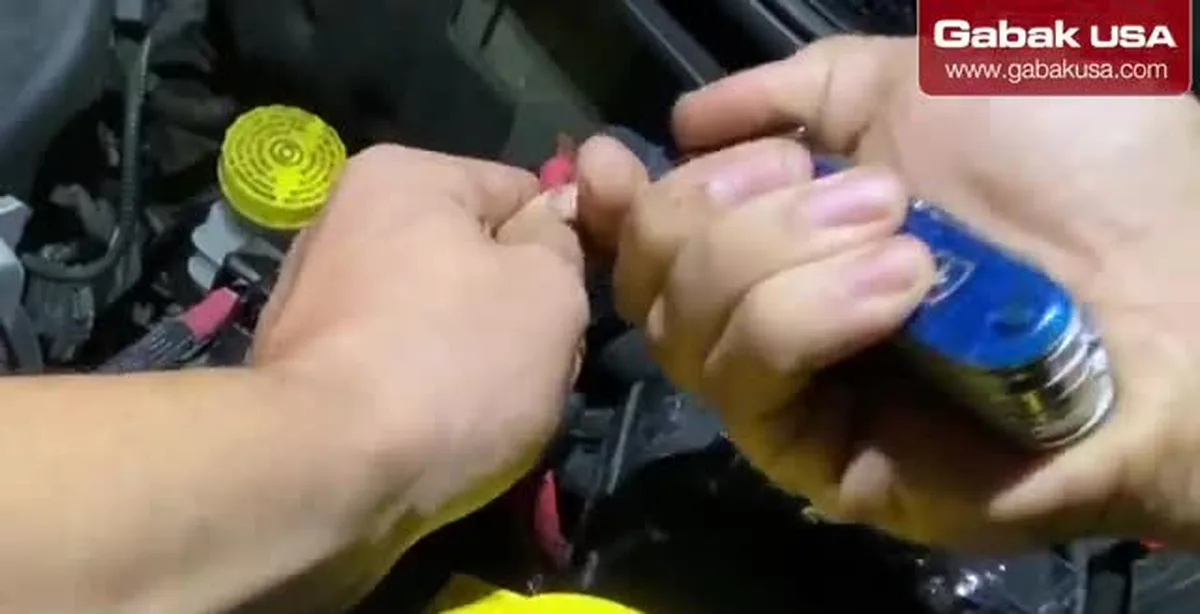
- Slide heat-shrink tubing on before you crimp, a little longer than the terminal.
- Strip so the copper reaches the back of the connector. I scored the jacket with a Victorinox CyberTool — do not cut the strands.
- Crimp with a real lug crimper. I set it for gauge 4. If the lug twists, cut and redo it.
- Shrink the tubing with a heat gun and do the same on the negative cable.
Caution: A weak crimp or a half-stripped lug will heat up under load. If it is loose, cut and redo it.
Step 9Land the positive cable at the battery, through a fuse
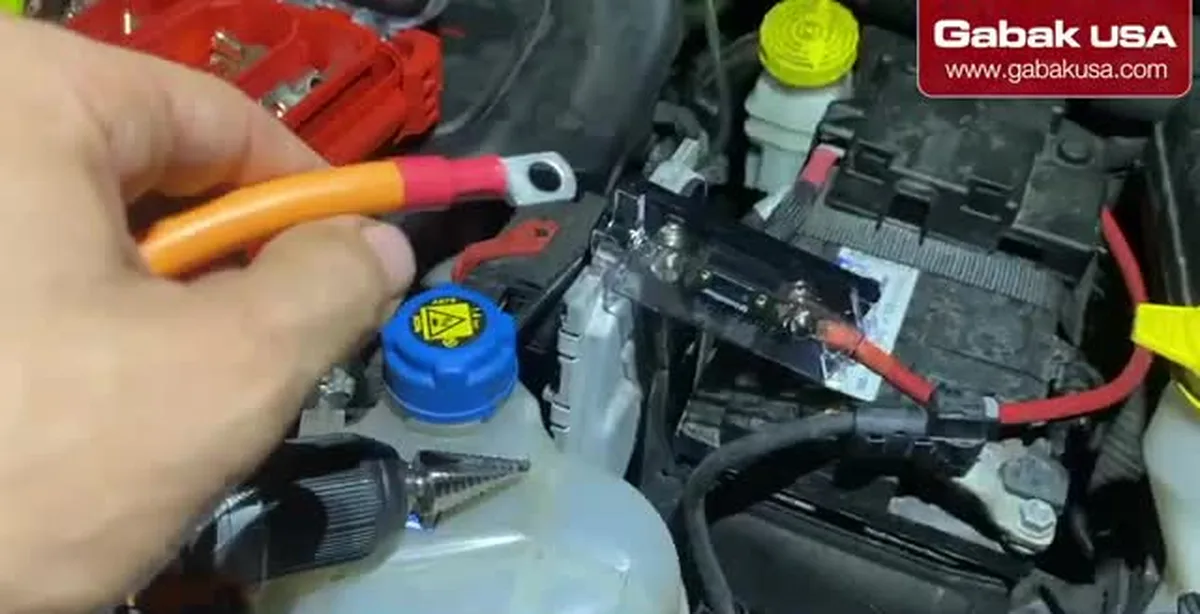
- The 4 AWG lug lands on the battery / fuse side. The photo shows the orange cable and the ANL-style fuse holder at the positive post.
- Leave the cable without tension, and use lock washers where the hardware needs them.
- Do not energize the inverter yet. Finish the fuse, ground and inverter lugs first.
Caution: A metal tool across the positive post and the chassis will make a huge spark. Cover the positive; do not leave wrenches on the battery.
Step 10Scrape paint and make a solid chassis ground
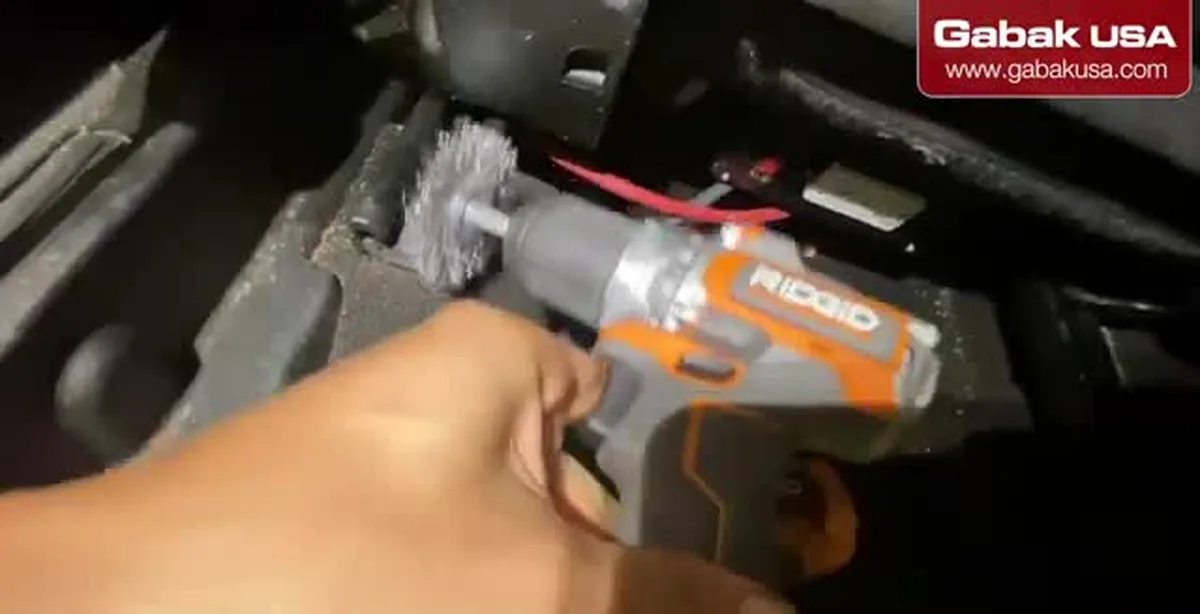
- Scrape the paint so the negative lug sits on bare metal. Paint is an insulator; a painted ground can heat up.
- I used a wire-brush wheel in the drill (abrasive cloth also works). Wear safety glasses — the wheel throws paint and metal.
- Tighten the ring terminal flat on the cleaned spot and zip-tie the cable so it cannot flex the lug.
Step 11Mount the ANL fuse so you can replace it later
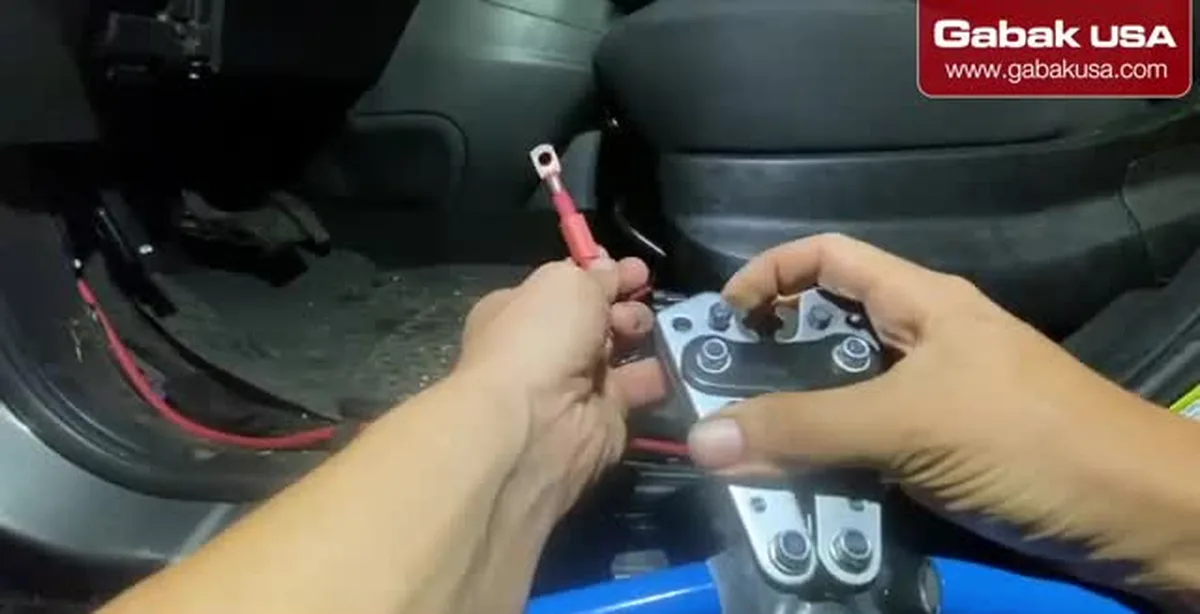
- I first tucked the fuse where it got in the way, then made a new hole and mounted it where I can reach it.
- Add extra nuts on the holder studs so the cables stay put if you pull the fuse later. Otherwise the heavy cables flop and you may have to disconnect the other end.
- Route zip ties so you can still service the fuse, then confirm washers and lock washers are on.
Step 12Power on and check the outlets and indicator lights
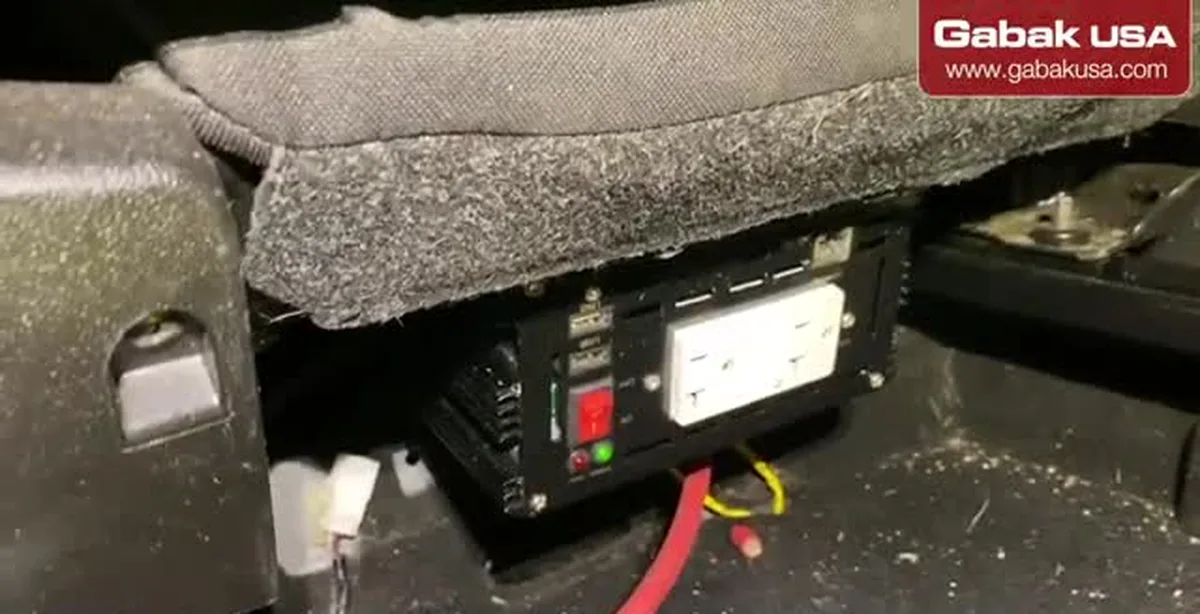
- Turn it on only after everything is tight. Under the seat you should see the AC outlet, USB ports, the switch and a green indicator.
- I also point out the GFCI (ground-fault) light. If it looks wrong, stop before you plug in a tool.
- This unit is 3,000 W peak / 1,500 W running — enough for my tools and chargers.
- Refit the plastics and the seat plugs (I forgot them once). Cover the exposed positive so a tool cannot short it to ground; I planned two nuts and a Velcro strap but did not finish that on camera.
Caution: If the inverter faults, smells hot, or the GFCI or status light looks wrong, switch off and re-check polarity, the fuse, the ground and the load.
Why use a car inverter instead of a portable generator?
A portable generator is the usual answer for an outage or a job with no power. In the video I prefer the van because:
- Noise. Even "quiet" generators are louder than a car or van.
- Monthly exercise and stale fuel. A stored generator needs to be run periodically (I mention once a month or every two months) or the fuel can go bad.
- You already own the engine. You are buying an inverter, cable and a fuse. In the 2021 video I ballpark an inverter at $300–$400, or about $2,000 for a top-end unit.
- Where it helps. Outages (I mention California and other places with frequent outages) and work with no outlet: parking lots, storage units, surveillance jobs.
This is not a whole-house generator or a desk UPS. For indoor battery backup, see my CyberPower ST425 UPS review and setup.
Pure sine wave vs square wave inverters
| Waveform | What I say in the video | Better for |
|---|---|---|
| Square (or very low quality) | A phone I connected started acting weird | Cheapest unit, simple tools only |
| Semi-square / modified | I group it with the non-pure options | Some tools; not my first choice for electronics |
| Pure sine wave | Computers, phones, tablets and tools worked normally | Mixed use: electronics plus tools |
If you will charge laptops, phones or batteries, or run a computer, buy pure sine. The Spartan under this seat is labeled pure sine wave and 1,500 W continuous, matching the 1,500 W running / 3,000 W peak figures in the talk. The same 12-volt habits apply to other DC accessories, such as powering a USB Wi-Fi camera far from an outlet.
How to keep the car battery charged
The inverter will flatten the battery if you pull more than the alternator or battery can replace.
- Small loads. I have left the inverter on overnight charging phones, laptops and tool batteries, and the next day the van started normally. That is my experience, not a rule for every vehicle.
- Large loads. For a heavy tool, run the engine, or arrange automatic start.
- Hybrids. I have left a hybrid 24 or 48 hours while charging: the engine came on every two or three hours, ran 10–15 minutes, then shut off.
- Regular cars and trucks. I installed a Viper alarm with a battery sensor (I think the model is SP4 — I was not certain on camera). You can set it to start the engine when the battery is under 11 volts, run 20–30 minutes, then shut off.
A low-voltage disconnect such as a Victron BatteryProtect BP-220 is a different approach: it drops the load instead of starting the engine. I do not install that in this video.
Troubleshooting a car power inverter install
| Problem | Likely cause | What to check |
|---|---|---|
| Inverter will not turn on | Fuse, polarity or a loose lug | Fuse, polarity, lugs tight on bare metal |
| Van will not start afterward | Battery was pulled too low | Charge or jump it; run the engine on larger loads |
| Phone or laptop acts odd | Square or modified sine | Use a pure sine inverter |
| Cable or lug is hot | Weak crimp, thin cable, or paint under the ground | Recrimp, upsize the cable, scrape the ground bare |
| Spark from a dropped tool | Exposed positive shorted to chassis | Cover the positive |
| Hard to change the fuse | Cables flop off the studs | Extra nuts on the holder |
| Seat will not go back, or seat power is dead | Plugs left off | Reconnect the two seat plugs; refit trim as it came off |
| GFCI or status light looks wrong | Ground fault or protection trip | Switch off, unplug the load, re-check the ground |
Safety checklist before you switch the inverter on
- Never run the vehicle in a closed garage (video description). Carbon monoxide from the exhaust is dangerous in an enclosed space.
- The fuse is in the positive cable, sized with a calculator for your inverter and cable.
- Polarity is correct, lugs are tight, and you have not powered it up while still crimping.
- The chassis ground is on bare metal; use safety glasses with a wire wheel.
- The positive post is covered so a dropped tool cannot spark to ground.
- The pass-through is protected (grommet / rubber), not sitting on a sharp metal edge.
- The inverter has airflow, the seat still moves, and the two seat plugs are reconnected.
- Stay within running watts (1,500 W on this Spartan), not the peak number.
- For long run times, plan to keep the battery up: engine running, a hybrid's auto start, or a low-voltage auto-start / disconnect.
Frequently asked questions
How do you turn a car into an electric generator?
Wire a 12-volt inverter to the battery through a fuse, give it a solid negative or chassis ground, and mount it where you can use the outlets — in the video, under a van seat. It converts 12 V DC to 110 V AC in the US (or 220 V if you buy that version).
What size inverter do I need for a car?
It depends on the load. I use a Spartan rated 3,000 W peak and 1,500 W running, which was plenty for small tools plus charging phones, laptops and batteries at once. For a circular saw I would look at at least 2,500–3,000 W.
Do I need a pure sine wave inverter in a car?
Yes if you will run electronics. I recommend pure sine for computers, phones and tablets. A low-quality square-wave inverter I tried made a phone act strangely. Simple power tools are more forgiving.
What size cable and fuse does a car inverter need?
It depends on wattage and cable length. Use cable thick enough for the current (lower AWG is thicker) and an ANL or Mega fuse on the positive if the inverter does not have one. I used 4 AWG in this van; use a fuse calculator for the amps.
Can a car inverter drain the battery?
Yes, if the load is large or you leave it on long enough. With small charging loads I have left this on overnight and the van still started. For heavy tools, run the engine, or use a hybrid's auto start or an alarm that can start the engine when voltage drops (I mention a Viper set around 11 volts).
Is it safe to run a car as a generator in a garage?
No. The video description says never run it in a closed garage. A running engine produces carbon monoxide. Use the setup outdoors or in a well-ventilated area.
Where should I mount a power inverter in a van?
I mounted this one under the seat so the outlets and switch are reachable but protected. Unbolt the seat (four screws on this ProMaster, one of them horizontal), unplug the seat connectors, screw the inverter down and leave room for the fans and for the seat to slide.
Can I use a car inverter with a hybrid?
Yes. I have seen a hybrid start and stop the engine on its own to keep the battery up, including for 24 or 48 hours while charging. Confirm your model's behavior in the owner's manual.
Watch the video




Comments
Comments appear after Gabriel reviews them.
Loading comments…